


GET UP TO 15% DISCOUNT!
Sign up now as a CBS member & enjoy our royal discounts!
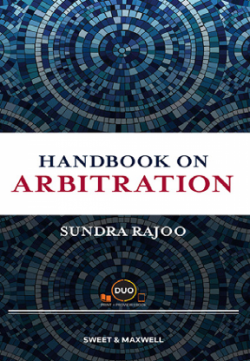
Handbook on Arbitration
- Publication Date : Jun - 2026
- Author : Sundra Rajoo
- ISBN : 9786297851372
- Format : Print + eBook
- Country : Malaysia
Arbitration in Malaysia is no longer what it was five years ago. Virtual hearings have moved from emergency expedient to default procedure. AI-assisted document review is approaching universal adoption. Sanctions, ESG, third party funding and cryptocurrency disputes have arrived in the hearing room – often without notice. The 2024 amendments to the Arbitration Act 2005 and the new AIAC Suite of Rules 2026 have reset the procedural map. The practitioner working from a textbook printed before 2023 is already behind.
This Handbook is the answer. Across 38 chapters, it takes the practitioner through the entire arbitral life cycle – from the formation and effect of the arbitration agreement through jurisdiction, tribunal constitution, conduct of proceedings, evidence, awards, costs, and the recognition and enforcement of arbitral awards under the New York Convention. Standard topics are treated with doctrinal precision and a serious eye for working procedure.
Anchored in the Arbitration Act 2005 (as amended in 2011, 2018 and 2024) and the AIAC Suite of Rules 2026, the Handbook considers each provision against the UNCITRAL Model Law and the jurisprudence of the leading Model Law jurisdictions – Singapore, Hong Kong, Australia, Canada and England – so that the Malaysian practitioner is never working in isolation, and the comparative practitioner finds in Malaysia a fully treated jurisdiction worth attending to.
Who this book is for:
- Arbitrators – for the doctrinal and procedural questions tribunals seated in Kuala Lumpur and the wider region actually have to decide.
- Counsel – for briefs and oral submissions in AIAC, ad hoc, and Malaysian-related international arbitrations.
- Judges – for the supervisory questions arising before the High Court on stay, set-aside and enforcement under the Arbitration Act 2005.
- In-house counsel – for risk management, contract drafting, and dispute strategy in cross-border commercial agreements.
- Academics and students – for the most current and comprehensive treatment of Malaysian arbitration as it stands in 2026.
Contents
Foundations (Chapters 1–3) Introductory concepts; the legal framework for arbitration; international and national framework.
The arbitration agreement (Chapters 4–7) Formation, effect, jurisdiction, stay of court proceedings.
Tribunal and funding (Chapters 8–13) Commencement, composition, appointment, qualification, remuneration, third party funding.
Conduct of proceedings (Chapters 14–21) Duties, powers, procedure, evidence, seat, interlocutory matters, default, the role of the court.
The award and its aftermath (Chapters 22–29) Types, publication, costs, mistakes, merits, effect, setting aside, recognition and enforcement.
Specialised regimes (Chapters 30–38) Maritime, sports, intellectual property, employment, construction, investment, sanctions, ESG, digital technologies.
Handbook on Arbitration
Arbitration in Malaysia is no longer what it was five years ago. Virtual hearings have moved from emergency expedient to default procedure. AI-assisted document review is approaching universal adoption. Sanctions, ESG, third party funding and cryptocurrency disputes have arrived in the hearing room – often without notice. The 2024 amendments to the Arbitration Act 2005 and the new AIAC Suite of Rules 2026 have reset the procedural map. The practitioner working from a textbook printed before 2023 is already behind.
This Handbook is the answer. Across 38 chapters, it takes the practitioner through the entire arbitral life cycle – from the formation and effect of the arbitration agreement through jurisdiction, tribunal constitution, conduct of proceedings, evidence, awards, costs, and the recognition and enforcement of arbitral awards under the New York Convention. Standard topics are treated with doctrinal precision and a serious eye for working procedure.
Anchored in the Arbitration Act 2005 (as amended in 2011, 2018 and 2024) and the AIAC Suite of Rules 2026, the Handbook considers each provision against the UNCITRAL Model Law and the jurisprudence of the leading Model Law jurisdictions – Singapore, Hong Kong, Australia, Canada and England – so that the Malaysian practitioner is never working in isolation, and the comparative practitioner finds in Malaysia a fully treated jurisdiction worth attending to.
Who this book is for:
- Arbitrators – for the doctrinal and procedural questions tribunals seated in Kuala Lumpur and the wider region actually have to decide.
- Counsel – for briefs and oral submissions in AIAC, ad hoc, and Malaysian-related international arbitrations.
- Judges – for the supervisory questions arising before the High Court on stay, set-aside and enforcement under the Arbitration Act 2005.
- In-house counsel – for risk management, contract drafting, and dispute strategy in cross-border commercial agreements.
- Academics and students – for the most current and comprehensive treatment of Malaysian arbitration as it stands in 2026.
Contents
Foundations (Chapters 1–3) Introductory concepts; the legal framework for arbitration; international and national framework.
The arbitration agreement (Chapters 4–7) Formation, effect, jurisdiction, stay of court proceedings.
Tribunal and funding (Chapters 8–13) Commencement, composition, appointment, qualification, remuneration, third party funding.
Conduct of proceedings (Chapters 14–21) Duties, powers, procedure, evidence, seat, interlocutory matters, default, the role of the court.
The award and its aftermath (Chapters 22–29) Types, publication, costs, mistakes, merits, effect, setting aside, recognition and enforcement.
Specialised regimes (Chapters 30–38) Maritime, sports, intellectual property, employment, construction, investment, sanctions, ESG, digital technologies.
GET UP TO 15% DISCOUNT!
Sign up now as a CBS member & enjoy our royal discounts!